My Cart
Your cart is empty.
Continue Shopping

A practical Jalabhishek-at-home guide covering mandir preparation, stand alignment, water flow, cleanup and respectful daily-use tips.
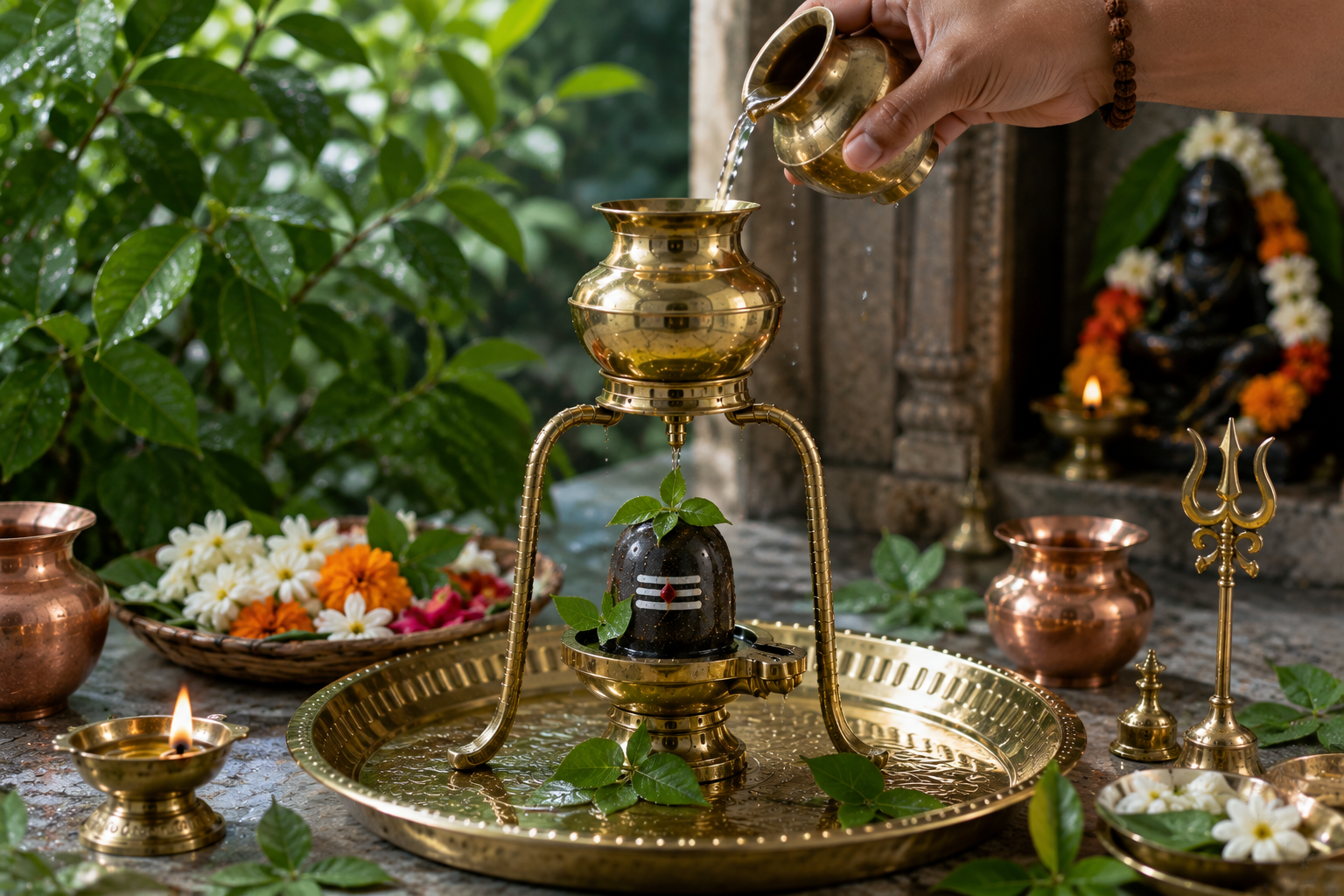
Many people searching “jalabhishek kaise kare” are looking for two different things: the religious sequence and the practical setup. Religious methods can differ across families and traditions, so this article focuses on the physical preparation of a clean and stable Shivling Jalabhishek at home setup. Follow the mantras and offerings taught in your own family or by your priest.
Start with a clean, level surface. Keep the Shivling, jaladhari, water vessel and collection plate within easy reach. If you use a Jalabhishek stand, make sure the frame is completely stable before adding water. A damp or uneven shelf can make even a good stand less secure.
Flow depends on the outlet hole, vessel shape and water level. If the stream misses the Shivling, adjust the vessel position rather than bending or forcing the stand. If the drip is faster than expected, use less water for short daily pooja. Never block an outlet with a material that may become stuck inside the vessel.
For easy daily use, keep a small clean cloth, a separate water container for refilling, and a tray for wet items. This reduces water around the mandir and makes cleanup quick. If your family uses flowers, bel patra, milk or other offerings, clean any residue promptly because dried residue is harder to remove from metal surfaces.
Hand-pouring is simple and suitable for a short offering. A stand is useful when you prefer a controlled drip or want both hands free for prayer. Neither choice needs to be complicated: the right option is the one that fits your space, tradition and routine.
If you are building a compact setup, browse the Shivling Stand collection and compare the actual product dimensions before selecting a size.