My Cart
Your cart is empty.
Continue Shopping

Understand how a Shivling water-drip stand creates continuous Jal Dhara, what controls flow rate, and how to align the lota, Shivling and jaladhari.
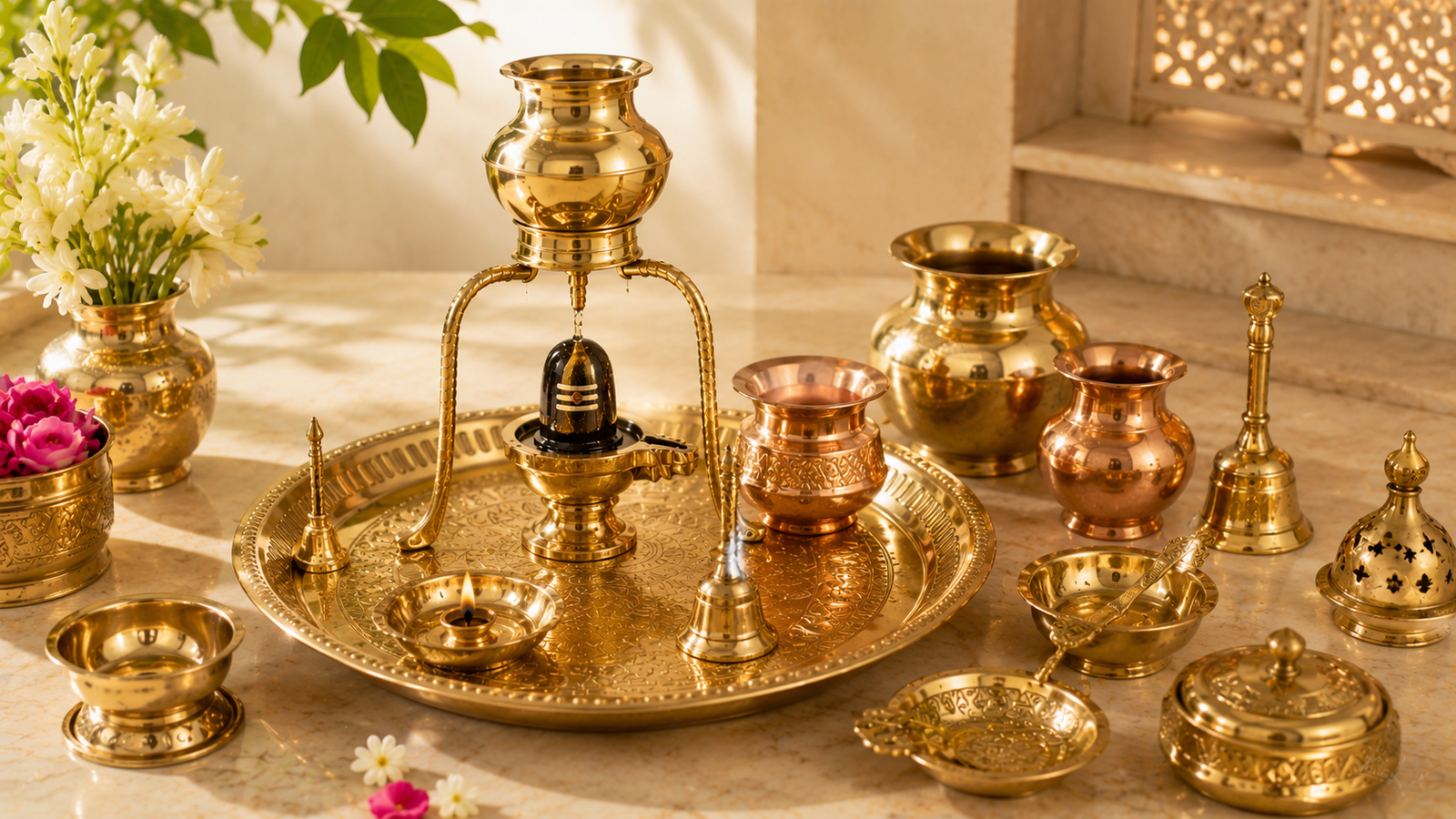
A continuous Jal Dhara Shivling setup uses a vessel positioned above the Shivling so water can flow slowly through a small outlet. Product listings may describe this as a Jalabhishek stand, drip stand, jal patra stand or nirantar jal dhara setup. The underlying mechanism is simple, but flow duration depends on several factors.
A larger opening generally allows faster flow. Even a small difference in hole size can change how long a vessel takes to empty.
The pressure at the outlet changes as the water level falls. Some vessels drip faster when full and slow down toward the end.
A wide vessel and a narrow vessel with the same capacity can behave differently because the water level changes at a different rate.
Air must replace water leaving the vessel. The design of the opening and lid can affect how smoothly this happens.
A 100 ml or 250 ml lota tells you how much it can hold, not exactly how many minutes it will drip. If duration matters to you, test your actual vessel with plain water and time it. This is more reliable than estimating from capacity alone.
If the flow stops unexpectedly, check the outlet for residue and rinse with clean water. If the flow pulses, check that air can enter the vessel normally. If the drip point moves as the vessel empties, make sure the lota is hanging straight and the stand is on a level surface.
Widening the hole is usually irreversible. A faster stream can also create more splashing and fill the collection plate sooner. Before changing anything, clean the opening and test different fill levels.
Focus on stable construction, easy vessel removal, adequate clearance and a plate sized for the expected water volume. A beautiful stand that is difficult to clean will be less convenient for a frequent Jal Dhara routine.
See Shivling water-drip and Jalabhishek stand options and compare lota capacity with your daily-use preference.