My Cart
Your cart is empty.
Continue Shopping

Learn how a Shivling Jal Abhishek Stand works, what to check before buying, and how to create a stable, clean and practical Jalabhishek setup at home.
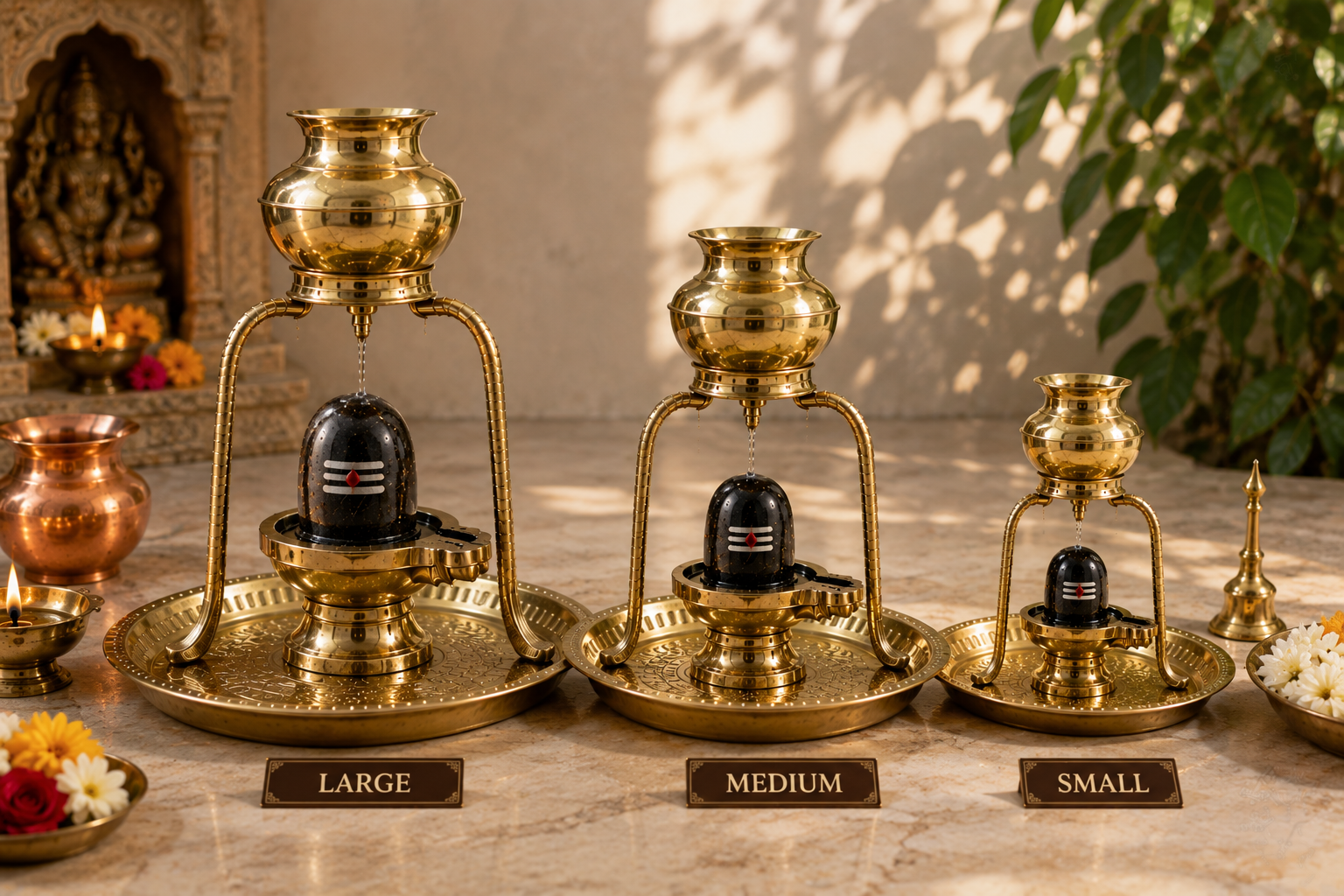
A Shivling Jal Abhishek Stand is designed to make daily water offering easier to manage in a home mandir. Instead of holding a lota continuously, the stand supports a small vessel above the Shivling and allows water to fall in a controlled stream or drip. A well-sized setup can also help keep the pooja area more organised by directing the water toward the jaladhari or collection plate.
This guide explains the practical side of choosing a Shivling Abhishek Stand: size, stability, lota capacity, material, plate clearance and cleaning. Ritual customs can vary by family, region and sampradaya, so use your own tradition for the religious sequence and use this article as a product-setup guide.
A typical stand has three functional parts: a stable frame, a hanging or supported jal patra/lota, and enough open space below for the Shivling and jaladhari. The vessel releases water slowly toward the centre. This makes it useful for daily pooja, Monday worship, Shravan/Sawan routines and occasions when you want a steady jal dhara without continuously holding the vessel.
Do not measure only the visible Shivling. Measure the full height including its jaladhari or argha. Then check the usable clearance under the lota. There should be enough space for the Shivling plus a practical gap for the water to fall cleanly.
A compact stand is useful for a small home mandir, but the legs or base should still sit fully on the pooja shelf or thali. If any leg sits close to an edge, the setup can become unstable when you fill the lota.
Smaller vessels are convenient for short daily use, while a larger capacity is useful when you prefer a longer flow. Capacity alone does not determine duration: outlet size and water level also affect how quickly the vessel empties.
Brass and copper are both commonly used in pooja accessories. Brass has a warm golden appearance and is widely used for stands, plates and kalash sets. Copper has a distinct reddish tone and develops natural patina with time. Both should be rinsed and dried after use.
The drip point should align over the Shivling, and the jaladhari should direct the used water toward the intended outlet or collection area. A decorative setup is valuable only when the water path also works practically.
For a small shelf mandir, prioritise compact dimensions and stable leg placement. For a medium Shivling, prioritise vertical clearance and a broader base. If you perform Jalabhishek frequently, choose a setup that is easy to disassemble, rinse and dry. If you are unsure, measure your Shivling with jaladhari and compare those measurements with the product specifications before ordering.
Explore Shivling Stand products and compare the listed dimensions, material and included components. For size guidance, you can also contact Shivling Stand before ordering.